Briefing@franciscoztpv066
Peptide Pureness Overview 98%, 99% & Research-grade Explained Prg
4 min read
Peptide Launch Qc Screening Solutions Bio-synthesis Making use of service providers that use cold-chain logistics and vacuum-sealed product packaging is crucial for stopping the degradation of sensitive series. Additionally, evaluating the mass research peptides market requires a balance in between cost-efficiency and the guarantee of batch-to-batch consistency. Independent verification remains one of the most reliable technique to make sure that the chemical identity matches the offered documentation. Along with HPLC and MS, specialized laboratories might employ orthogonal methods for included accuracy. As an example, capillary electrophoresis can be made use of to separate very hydrophilic peptides or to verify outcomes, and MALDI-TOF mass spectrometry can assist in mapping bigger or changed peptides. Lots of peptide manufacturers or suppliers will give a COA (Certificate of Analysis), for example our bpc 157 tb 500 blend, Scientific Research that includes the purity percent by HPLC and identity confirmation by MS for each and every batch.
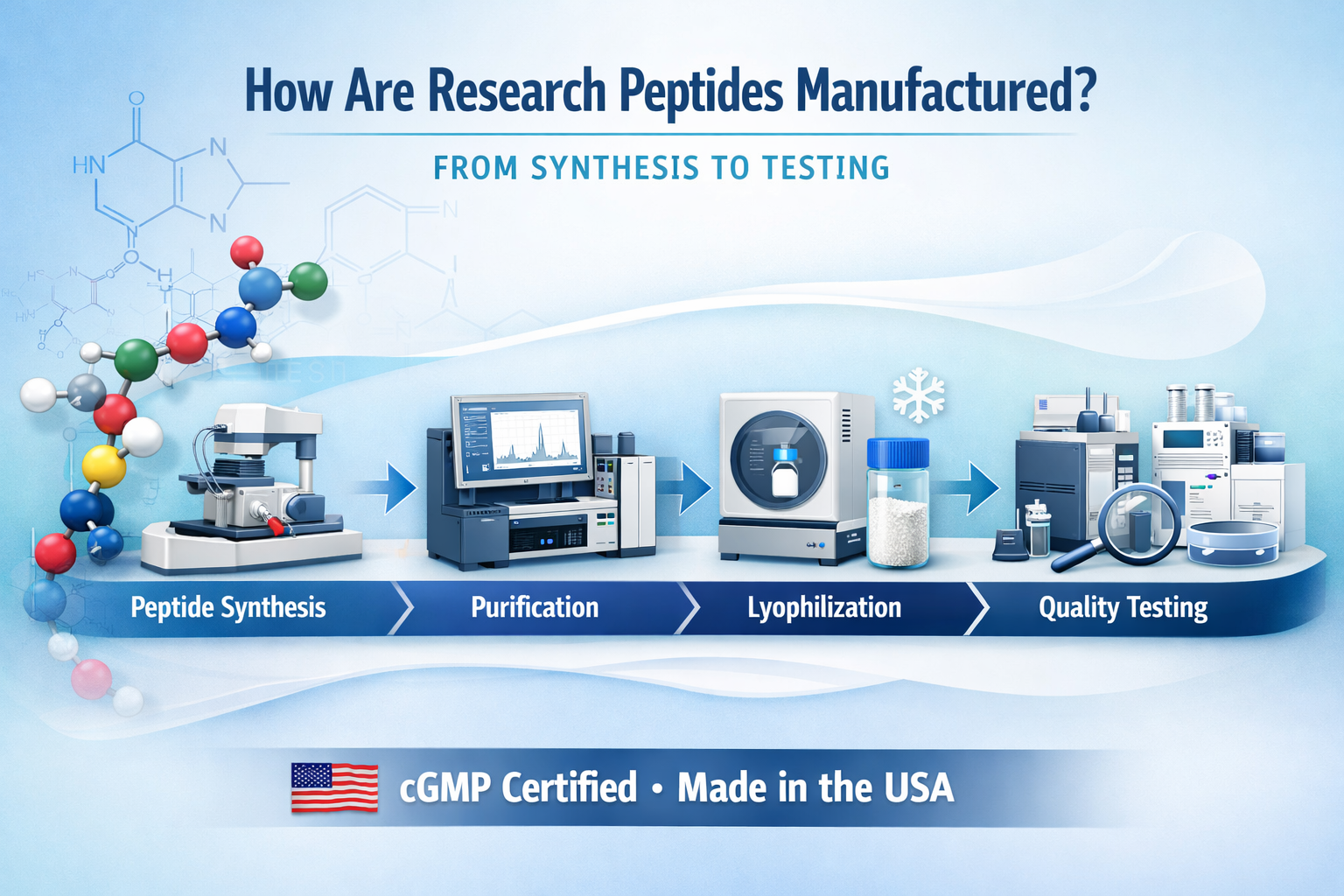
- Peptide screening is the analytical process used to verify that a research peptide is both pure and appropriately determined.
- This is especially appropriate for injectable peptides where the administration course bypasses regular protective obstacles.
- Given the appeal of substances reviewed in resources like the semaglutide versus tirzepatide contrast, confirmation makes sure research with the intended compound.
- When a peptide is 98% pure, that remaining 2% isn't random sound-- it specifies, identifiable types of results.
- Peptide purity screening is among the most vital parts of study peptide quality assurance.
- HPLC divides the target peptide from contaminations, measuring purity.
Approach Transfer & Validation Options
HPLC is among one of the most commonly utilized methods in peptide pureness testing. If you see multiple huge peaks of similar elevation, you're considering either a low-purity sample or a blend. If the major height has a noticeable "shoulder"-- a bump on one side-- that frequently shows a closely related pollutant (like a removal peptide) that the column couldn't fully settle. The peptide is gone through a straightforward filtration step (typically gel filtering or a fast reversed-phase cleaning) to remove salts, small-molecule by-products, and scavengers from the cleavage step. The contrast between BPC-157 and TB-500 relies upon both compounds being properly determined. Evaluating validates you're comparing what you mean to contrast. This procedure produces a qualified supplier list you can rely on for ongoing acquisitions. Resources like SeekPeptides provide advice for vendor analysis alongside other study assistance. Past specific screening decisions, organized techniques to quality control boost general study integrity. If testing discloses problems, you have actually lost only a tiny financial investment rather than a big one. In several laboratories, HPLC results are also validated with another examination that checks the peptide's exact molecular weight, including an extra layer of confirmation. If the COA notes "complete contaminations", that enhances the purity figure (e.g., 98% pureness indicates 2% complete impurities). Many COAs also define well-known or "specified impurities" versus undefined ones, each with their specific portions MOTS-c if over a particular threshold. This degree of detail assists scientists comprehend if any small peptide by-products exist. Trusted peptide sourcing solutions for clinic proprietors who focus on safety and security, top quality, and constant client end results. Discover vendors that supply compliant, high-purity items backed by clear screening and documents. The Limulus Amebocyte Lysate (LAL) examination is the basic method for endotoxin metrology. It utilizes a clotting reaction from horseshoe crab blood cells that is especially set off by bacterial LPS. Results are shared in Endotoxin Units per milligram (EU/mg) or per milliliter (EU/mL).Is 95% purity good for peptides?
Peptides with an 85% pureness level or better are normally utilized in enzyme assays or biological task studies. Peptides with pureness greater than 95% are outstanding for measurable analysis.
Purity Qualities Explained
Importantly, pureness percents explain chemical composition only-- they do not suggest sterility or biological suitability. Peptides from Maxed Out Compounds are provided specifically for research laboratory study use and are not planned for human or veterinary functions. The bottom line is not to puzzle pureness (HPLC percent of the primary peptide vs contaminations) with general material. For experimental preparation (like determining molar concentrations), both pureness and internet web content work numbers, however pureness is what shows the chemical homogeneity of the peptide sample.Exactly How Mass Specification Recognizes Peptides
For research-grade peptide qualification, HPLC and LC-MS/ESI-MS answer different inquiries and need to be read together. MZ Biolabs supplies third-party screening services referenced by various peptide vendors. The laboratory supplies common analytical services including HPLC and mass spectrometry analysis.